When you need to choose a winner, decide who goes first, or distribute limited resources fairly, two popular options come to mind: a random picker tool or a traditional lottery system. Each has its place, and the right choice depends on what you’re trying to accomplish.
This guide walks through the practical differences, the trust signals each method provides, and how to pick the right one for your specific situation.
What is a Random Picker Tool?
A random picker tool is a software application that uses a randomization algorithm to select one or more items from a list. You provide the list, the tool handles the selection. Most modern random pickers use cryptographically secure random number generators, which means the outcome cannot be predicted or manipulated by anyone, including the tool operator.
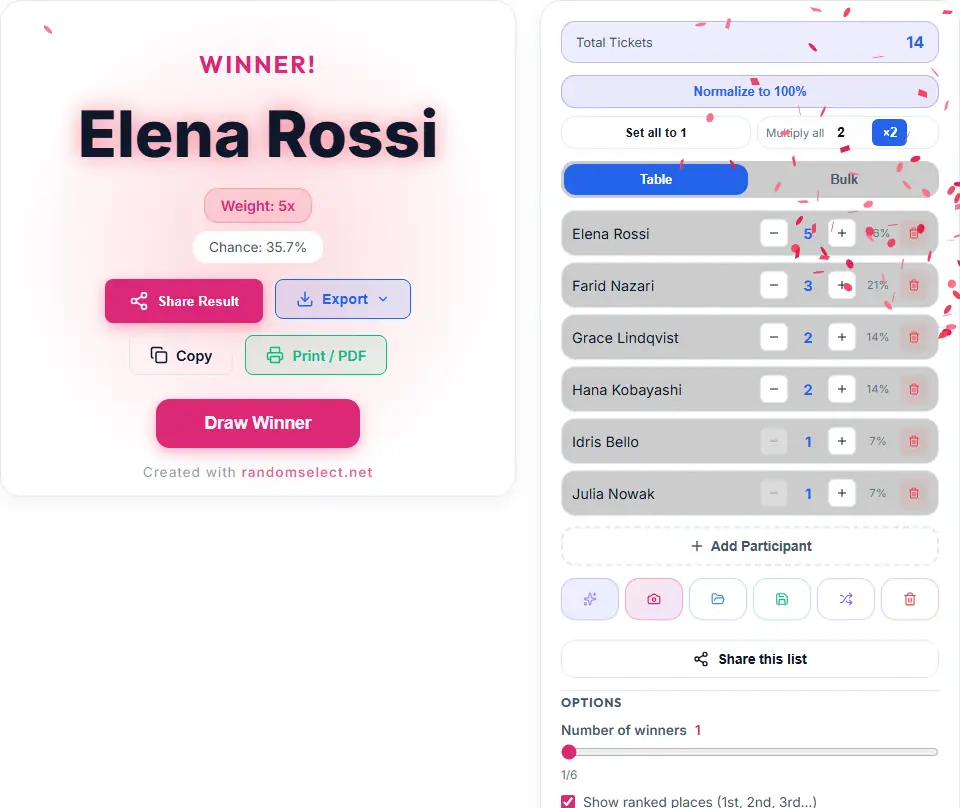
Random pickers are ideal when you need to:
- Choose a winner from a list of contest entrants
- Decide which team member answers a question
- Pick a restaurant for the team lunch
- Distribute chores fairly
- Assign random partners for a project
- Conduct a quick classroom drawing
The entire process takes seconds. You paste your list, click a button, and the tool announces the winner.
What is a Traditional Lottery System?
A lottery system is a formal drawing process, often regulated by law, that distributes prizes based on chance. Examples include state-run lotteries, raffles for charity, and bingo games. Lotteries typically involve:
- A central authority operating the draw
- Physical or virtual tickets that participants purchase
- A formal drawing event with witnesses
- Published rules and prize structures
- Sometimes, government regulation and oversight
Lotteries are designed for large-scale, high-stakes distribution where trust in the outcome is critical.
Key Differences
Speed and Convenience
A random picker tool delivers results in seconds. A traditional lottery takes days, weeks, or months to organize, with significant overhead for tickets, drawing events, and prize distribution.
If you need a winner chosen today, a random picker is your only realistic option. If you have time to plan a multi-week raffle, a lottery can work.
Trust and Verification
Modern random pickers publish their source code and document their randomization algorithm. This allows technically inclined users to verify that the tool cannot cheat. The results are reproducible if you re-enter the same list, and many tools publish the seed and method used for each draw.
Traditional lotteries build trust differently. They rely on the reputation of the operating authority, third-party auditors, witnesses at the draw, and physical or video records of the drawing event. The trust comes from institutional credibility rather than transparent code.
For most small-scale needs, the transparency of a random picker is more than sufficient. For high-stakes scenarios, the institutional credibility of a lottery may be necessary.
Cost
Random picker tools range from free to a few dollars per month for premium features. Traditional lotteries involve costs for tickets, printing, event space, staff, legal compliance, and prize fulfillment.
If you’re choosing a winner from a list of 50 customers, a free random picker is the obvious choice. If you’re running a charity raffle with 10,000 participants, a lottery structure makes sense.
Legal Considerations
Random pickers typically don’t require special legal treatment for informal use. However, if you’re running a promotional giveaway that requires a purchase or has a value exceeding certain thresholds, gambling laws may apply regardless of the mechanism you use.
Lotteries are heavily regulated in most jurisdictions, with specific rules about licensing, ticket sales, prize disclosure, and reporting. Running a lottery without proper legal review can result in significant penalties.
Always consult a lawyer before running any prize promotion, regardless of which method you choose.
When to Use a Random Picker
Choose a random picker when:
- The list is small to medium (under 10,000 names)
- The stakes are modest (small prizes, recognition, fair distribution)
- Speed matters
- Budget is limited
- You need an auditable process
- Participants don’t need to buy tickets or pay to enter
Common use cases include Instagram comment giveaways, classroom drawings, team decision making, fair distribution of chores, and quick prize draws at events.
When to Use a Lottery System
Choose a lottery when:
- The participant list is very large
- The stakes are high (cash prizes, expensive items)
- Legal compliance requires formal structure
- You need a published prize structure
- Participants expect to purchase tickets
- An institutional authority adds credibility
Common use cases include charity raffles, state lotteries, and large promotional sweepstakes where the legal complexity justifies the overhead.
A Hybrid Approach
Many successful organizations use a hybrid approach. They use a random picker tool for day-to-day decisions and a lottery-style system for major promotions. This gives them the speed of the picker for routine work and the institutional credibility of a lottery for high-stakes draws.
For example, an online store might use a random picker to choose which customer review to feature on their homepage each week, then run a formal lottery for their annual holiday giveaway with a $5,000 prize. The picker handles the routine work, the lottery handles the headline event.
Making the Right Choice
The choice between a random picker and a lottery system isn’t about which is “better.” It’s about which fits your situation. For most everyday decisions and small-scale promotions, a random picker delivers trustworthy results quickly and affordably. For large-scale, high-stakes draws with legal complexity, a formal lottery system provides the structure and credibility you need.
In either case, the goal is the same: a fair, transparent, and trusted outcome that everyone accepts. Both methods can deliver that when matched to the right context.