Distributed teams lose something when a decision is made that a co-located team keeps: the ability to settle it in the room. A raised hand, a glance, a thirty-second conversation that ends the question before it becomes a thread.
Random selection is a partial substitute. It works well when the decision is genuinely arbitrary, and it does not help at all when the real problem is that people disagree.
What Remote Distribution Actually Changes
Timezone inequality is the real problem, not randomness. Someone in a later timezone consistently misses decisions made at a convenient time for the majority. Randomising the choice does not help them; it only changes which colleague they are unlucky enough to always lose to.
If your team spans enough zones that this is happening, the fix is rotating meeting times, not a better tie-breaker.
Visibility replaces presence. In a room, the fact that a draw happened is public because everyone was there. Remote, you have to construct that visibility deliberately. A person who did not see the draw has no reason to believe it, and — reasonably — may not.
Records matter more. A verbal decision has a memory; a remote one has a screenshot. Teams that adopt random selection remotely tend to keep a record automatically, which turns out to be the main benefit.
What It Works Well For
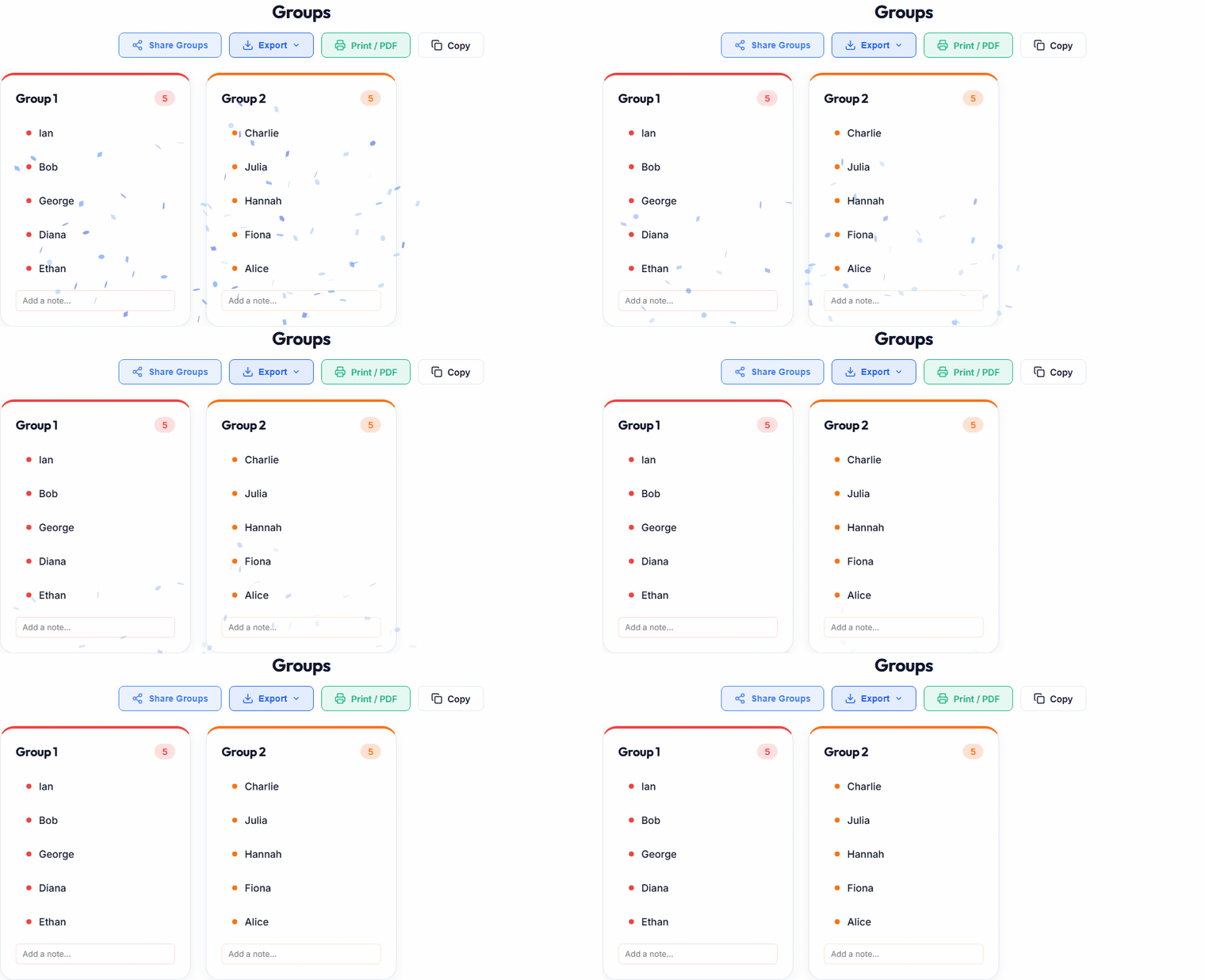
Forming breakout rooms. The strongest case. Everyone already knows the meeting is awkward and wants a fast resolution, and the alternative — a manager typing names in the chat — reintroduces exactly the visibility problem the draw was meant to solve. Run it on a shared screen.
Presentation and facilitation order. Nobody minds presenting third; they mind being fourth when the last three were volunteers.
Choosing between equivalent options. A menu for the team lunch, which of two meeting slots to keep, which of three equal candidates to escalate first.
On-call and rota gaps. When there is a gap nobody volunteers for, a draw settles it and nobody can later claim the person was targeted.
What It Does Not Fix
Decisions people actually disagree about. If the team thinks option A is better and one person thinks B is better, a coin flip does not produce agreement — it produces someone who lost a coin flip. Save the draw for decisions where the alternatives are genuinely equivalent.
Anything with a skill or seniority component. Random assignment for a skill-dependent task will sometimes pick the wrong person, and no amount of fairness compensates.
Timezone access. Covered above, and worth restating: if someone is never present when the draw happens, randomising everything means they never win.
Making It Work Remotely
Run the draw where people can see it. Share your screen. This is the single most important step and it costs nothing. A draw nobody witnessed is indistinguishable from a rigged one.
Show the list, not just the result. The participant list on screen is the evidence that everyone eligible was in the pool. A screenshot of just the winner proves nothing.
Announce the mechanism first. “I’m using a random draw so nobody has to volunteer” changes how the room receives the outcome. It converts the moment from an assessment into a formality.
Use a tool that works on a phone. Someone joining from a phone should be able to see the result. This sounds obvious and is regularly ignored.
Write down what was drawn and when. A short note in the channel: date, list, method, result. This is the thing that prevents a dispute three weeks later, and it takes thirty seconds.
Let the person it affects run it. If someone is going to draw your name, hand them the controls. They see the whole sequence, which removes a suspicion you would otherwise be managing all term.
A Note on Asynchronous Teams
For teams that never meet live, screen-sharing is not available. Two alternatives work:
Post the draw as you would any message, with the list in the message and the result below it, and leave it up. Anyone can re-run it and get the same result only if they have the same list — which is exactly the property that makes it checkable.
Or accept that the decision does not need to be synchronous. A draw announced on Tuesday and open for comment until Wednesday is often fairer than a live draw that four people could not attend.
Language and Access
The interface is available in twelve languages, which matters for distributed teams more than for co-located ones — a team spanning four countries does not share a first language, and a tool that only works in one is a tool half the team cannot operate.
Same principle, same care: if you randomise something meaningful, make sure everyone affected could have seen how it was decided.
What Underpins It
The draws use the browser’s cryptographic random source rather than Math.random(), which is predictable and can, in principle, be anticipated. For a remote team where the draw happens off-camera, that is the substance of the fairness claim rather than a technicality. The fairness page covers it.
Start With Breakout Rooms
The next time you have a meeting where everyone dreads the awkward thirty seconds of forming groups, share your screen, run the Group Maker, and let it resolve. It takes less time than the silence would have.
After that, try it for one of the smaller decisions. Teams that get value from this rarely go back to typing names in a chat.