A random draw has no value if nobody believes it was random. The result might be perfectly fair, but a process people do not trust still costs you credibility — and the people most likely to object are the ones who lost.
The requirements are short. Most failures come from missing one of them rather than from a bad tool.
Why Fairness Is Worth the Effort
Three things happen when a draw is disputed. Trust in the process drops, which affects every future contest. A winner may feel the result was unfair regardless of the outcome. And people decline to enter next time, because they do not believe participation is meaningful.
None of this is about the winner. It is about whether anyone will run another contest with you.
The Four Requirements
1. A fixed, published pool. Every eligible entrant, named, in the state it was when the entries closed. Not a count — a list. People read a number as an assertion and a list as evidence.
2. A stated method. “One winner drawn uniformly from all qualifying entries.” If your rules permit extra entries, say so and say how they are weighted. The Weighted Raffle makes weights explicit for exactly this reason.
3. A source that cannot be anticipated. A physical bottle being spun and a spreadsheet formula run by one person both read as biased even when they are not. This is the requirement most tools get wrong: Math.random() is deterministic, so its outputs can in principle be used to predict what comes next. A cryptographic source cannot. The fairness page covers the difference.
4. A record with the pool visible. A screenshot or recording showing the participant list and the result in the same frame.
That is the complete set. Anything longer is ceremony.
Running It
Build the list carefully. The most common failure is a simple omission — a comment thread you missed, a source you forgot you had. If entries came from more than one place, compile them all before drawing rather than drawing from what you have.
Resolve duplicates first. “Mark Smith”, “mark smith” and “Mark Smyth” are one person or three, and you should have decided which before you draw. If your rules allow multiple entries, that is a weighting question rather than a duplicate question — keep them and use weights, or turn on duplicate prevention if the rules say one entry each.
Show the list before starting. Not to everyone in real time — to whoever will care later. The point is that a correction made before the draw is invisible and one made after is a headline.
Use “Remove Winner” for multiple prizes. It lets you draw several times without the same name coming up, and it makes each draw visibly fair rather than only the first.
Record from before the draw starts. Starting the recording afterwards captures a result with no context, which is worse than no recording because it looks like evidence.
What to Avoid
Spinning a bottle. Not biased in any meaningful sense, and universally read as biased. There is no version of this that persuades a determined objector.
Names from a hat. Genuinely hard to verify afterwards, and impossible to demonstrate that nobody looked.
A spreadsheet formula run by one person. Statistically adequate, and completely unverifiable — the person running it controls the input and nobody else can check it.
Re-running an unpopular result. This is the one that genuinely damages trust, because it converts a random procedure into a search for a preferred answer, and everyone watching can see it happen. If there was a real error, correct it publicly and re-run, saying why.
Hand-adjusting the list mid-draw. Every adjustment after the draw has started is something a critic can point at. Clean the list before you begin.
Where Visibility Helps
Screen-share it. For a live draw, this is the single highest-value habit. A draw nobody witnessed is indistinguishable from a rigged one.
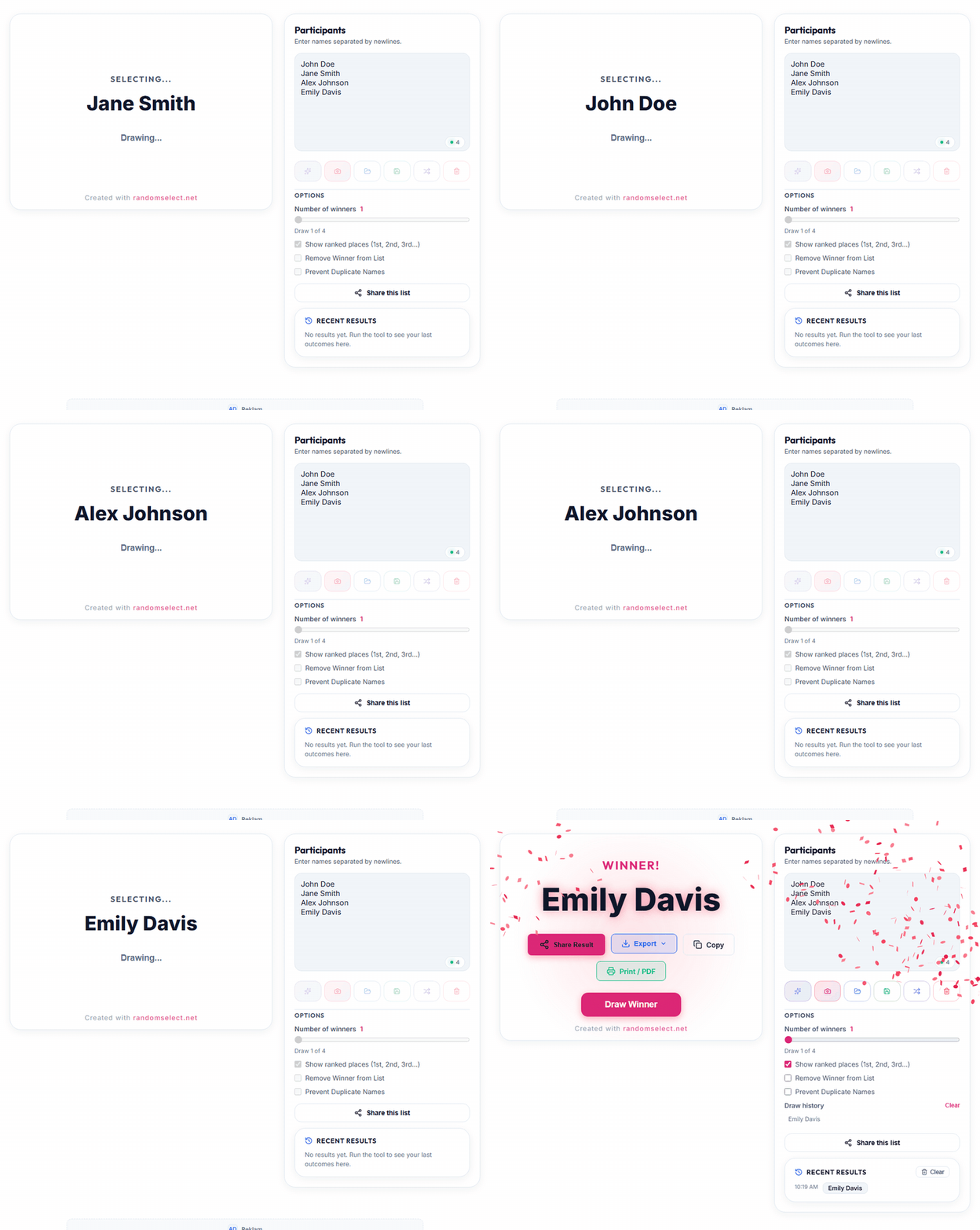
Let someone else run it. If somebody affected by the result operates the tool, they cannot later be suspected of favouring anyone. This is a small change with a large effect on how the outcome lands.
Post the recording rather than offering it. Publishing it pre-empts the complaint. Offering it on request invites the question of what else you might not publish.
The Method Matters Less Than You Think
Most people believe a tool choice decides the outcome. It does not — a draw from a predictable source and a draw from a cryptographic one both produce a name, and nobody can tell them apart.
What people can tell apart is whether the pool was visible, whether the method matched the rules, and whether the operator had any opportunity to adjust something. That is where disputes come from, every time.
So the effort is worth spending on the record, and the tool choice is worth making once on principle rather than repeatedly on anxiety.
A Classroom Version
The same four requirements apply to picking a student, at lower stakes.
Pool fixed — your saved class list, minus absentees. Method stated — everyone equally likely. Source sound — a cryptographic generator, not a formula. Record available — a screenshot if a parent asks.
Which is a reasonable way to answer “how do you know it’s actually random?” without appealing to authority.
Announcing the Result
Publish the winner, the number of qualifying entries, and the recording. Then contact the winner privately with a deadline you stated in the rules beforehand.
Decide in advance what happens if they do not respond. A re-draw and a disqualification are both defensible; applying whichever rule suits you after the fact is not.
And do not over-explain the win. A short post naming the winner and linking the recording reads as confidence. A long justification reads as a defence, and invites the question it was meant to settle.
Getting Started
Open Lucky Draw, paste the list, and start recording before you press the button.
The draw takes two seconds. Everything that makes it defensible happens before and after.